Pine beetles, dying pines and the pines that fall
Pines are the Gulf Coast's most common tree and its most common storm casualty. The 2024 southern pine beetle epidemic made it worse. Here is how to read a pine, what the Forestry Commission says to do, and which pines to take down before the season.
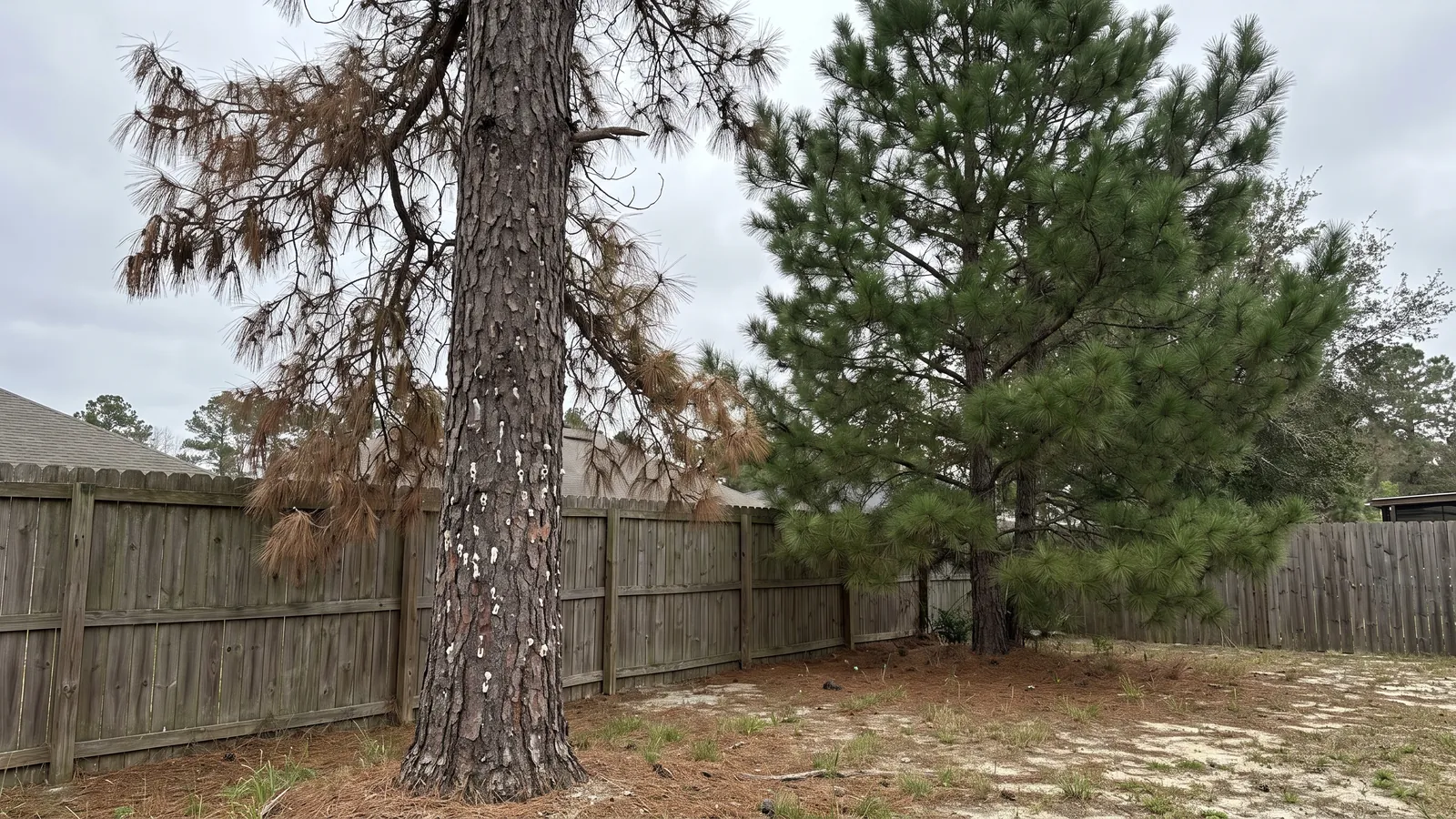
The 2024 epidemic
In September 2024 the Alabama Forestry Commission declared southern pine beetles at epidemic levels across the state. Forest Health Coordinator Drew Metzler reported nearly 9,000 beetle spots, averaging 191 dead pines per spot, more than 1.5 million pines dying or dead by the news estimate, and the state forester called it the highest number of beetle spots in 23 years. The worst of it was in and around the Bankhead and Talladega National Forests, but the beetle is everywhere pines are stressed, and the Commission expected more spots through the end of that summer. The U.S. Forest Service said the primary hosts are loblolly, shortleaf and slash pine, sometimes longleaf, and that the common stressors are wind damage, drought and other environmental conditions. In Mobile County that means the pines in the subdivisions, the plantation rows in Grand Bay and the lone pines left standing after lots were cleared.
How to read a pine
- Pitch tubes. Popcorn-sized blobs of resin on the bark where the tree tried to push the beetles out. On a healthy pine the pitch wins; on a stressed one it doesn't.
- Boring dust. Reddish sawdust in the bark crevices and at the base of the trunk.
- The crown. Green to yellow to rust-red over a few weeks. By the time it's red the beetles have usually moved to the next tree.
- Spots. Beetles work in groups and spread tree to tree, which is why a yard loses three pines in a row. The Forestry Commission's insect and disease map shows active spots as red dots.
What the Forestry Commission says to do
Watch your pines closely and act quickly to prevent spread. Identify the infestation, then remove the infested trees; on larger properties the Commission's advice was to hire a contractor for timber-sized trees and, in the words of its forest health coordinator, to push infested trees over with a bulldozer along with a buffer around them to stop the spread. Private landowners can contact the Commission at 334-240-9300. There is no spray that saves an attacked pine; the beetles girdle it under the bark. The point of fast removal is protecting the pines around it.
Why a dead pine can't wait
The U.S. Forest Service's warning is specific: southern pine beetles cause structural defects that make trees likely to fall, including trees that are dead but still standing. Pine wood goes brittle within months of the tree dying, which is why a dead pine can't be safely climbed and comes down from a bucket truck or with a crane, and why it costs 20 to 40 percent more than a live one. A dead pine over a house is a removal this month, not next year.
The other pine problem: standing alone
Beetles aside, the pine that lands on a Mobile roof in a hurricane is usually a healthy one. The University of Florida's hurricane research explains it: tall, slender pines that grew up in a forest relied on one another for support, and when the stand is cleared for a subdivision and a few are left for shade, they face wind they were never braced for. Add shallow roots from a high water table and 66 inches of rain a year on sand, and a lone 80-foot loblolly beside a house is the single most predictable failure on the coast. A pine that grew in the open with a full crown and a wide root system is a much stronger tree, and a longleaf with room around it is a fine one. The question in a prep visit is always the same: did this pine grow up alone or in a crowd, and what's under it?
What to plant instead
Where a pine comes out near the house, plant something from the survivor list: a live oak with room, a southern magnolia, a bald cypress, a nuttall oak for faster shade. If you want a pine, make it a longleaf, planted in the open with space to grow a full crown. Not another slash pine against the fence line.
Common questions
Can my pine be saved once it has beetles?
Almost never once it's attacked. Removing it promptly can save the pines around it. Preventive sprays exist for individual high-value pines but have to be applied before an attack.
How fast does a beetle-killed pine need to come down?
Within weeks if it's over a house, a driveway or a line. The wood turns brittle quickly and the Forest Service warns these trees are likely to fall while standing.
Why does a dead pine cost more to remove?
Because it can't be climbed. Brittle limbs snap under a rope, so dead pines come down from a bucket truck or with a crane.
Is one tall pine next to my house really a risk?
It depends on how it grew. A pine that grew up in a stand and lost its neighbors is the classic hurricane failure. A pine that grew in the open with a full crown is much stronger. We'll tell you which you have.
Do I need a permit to remove a pine?
Not on a developed lot in the City of Mobile outside a historic district, unless the pine is in the right-of-way. Longleaf pines of 18 inches (8 in a historic district) are Heritage Trees. Loblolly and slash are not.
Can the wood be used?
Beetle-killed pine should leave the property to limit spread, and it makes poor firewood anyway. Sound pine logs have some value as pulpwood on larger clearing jobs.
Related: Pine removal · Tree health · Hurricane prep · Crane removal · West Mobile